CASE STUDY 02 / 03
Design completed · not launched
MARKETPLACE · MOBILE
0→1 PRODUCT DESIGN
2 MONTHS
Oloja — service marketplace

Finding a provider is one problem. Trusting the transaction is another.

I designed Oloja from the ground up — a service marketplace connecting customers with providers through transparent offers, negotiation and escrow-protected payments.

RoleProduct Designer
TimelineFeb 2025 – Apr 2025 · 2 months
TeamStakeholders, Developers, QA
ContributionResearch, product definition, UX/UI, design system, prototyping
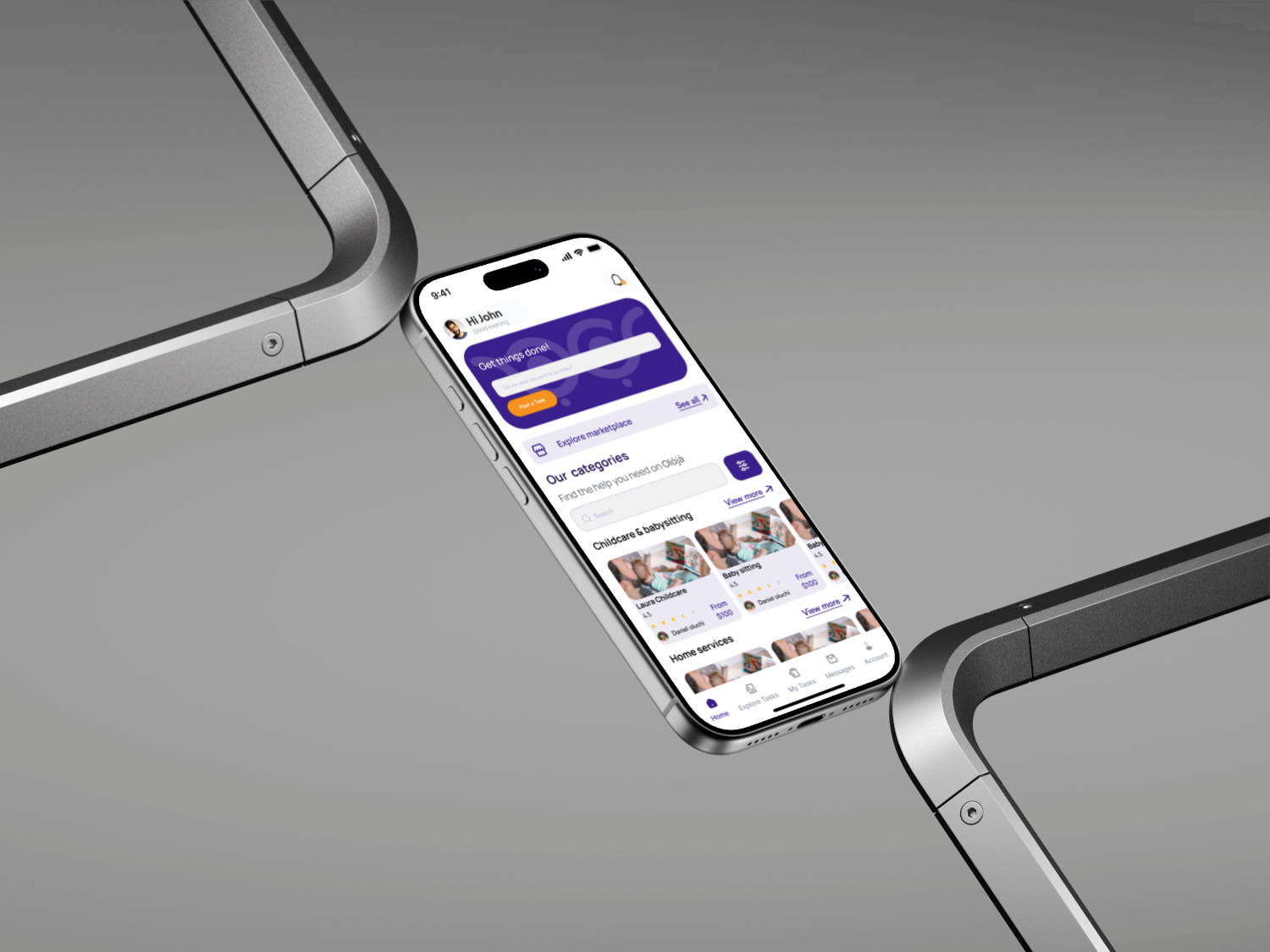
Oloja marketplace app — home screen showing categories and service listings
OLOJA — MARKETPLACE HOME · CATEGORIES & SERVICE DISCOVERY
THE SHORT VERSION

I received the initial product brief from stakeholders and translated it into the product experience. I spoke directly with the target audience, designed the customer and provider experiences, created the design system, and prepared the product for development.

The product did not ultimately launch, due to technical and company-level constraints — that's part of this story, not hidden from it.

TIMELINEFebruary 2025 – April 2025
STATUSDesign completed · development handoff · not launched
SCOPECustomer, provider & transaction experience — end to end
FOCUSTrust, negotiation, escrow-protected payments
SYSTEMFull design system created from scratch
THE CONTEXT

Oloja was designed to connect customers who needed services with providers who could deliver them.

But both sides had reasons to hesitate. Customers didn't know if a provider could be trusted, whether a price was fair, or what would happen after they paid. Providers didn't know how they'd get discovered, whether an enquiry would turn into paid work, or whether they'd get paid at all.

The challenge was to design a marketplace that worked for both sides of the transaction — not just a platform for discovering services.

“Optimising one side of a marketplace can easily create friction for the other.”
— the principle that shaped every major decision
THE PROBLEM

Two sides of the same transaction,
with different questions.

Customers needed to know
  • Can I trust this provider?
  • Is this price fair?
  • What happens after I pay?
Providers needed to know
  • How do I get discovered?
  • Will I actually get the job?
  • Will I get paid, and is my time protected?
UNDERSTANDING THE USERS

Five needs that shaped the marketplace model

I spoke with members of Oloja's target audience through Zoom conversations to understand how they currently find, evaluate and pay for services.

01

Trust needed evidence

Users didn't want to rely only on the platform's promise that a provider was trustworthy. Ratings, reviews and previous work could help them evaluate providers before committing.

02

Customers wanted options

Users wanted to compare different providers and offers rather than being locked into a single quote.

03

Providers needed visibility

Providers wanted access to relevant customers and opportunities to earn through the platform.

04

Providers also needed protection

Being visible to more customers could mean spending more time answering enquiries that never became paid work.

05

Payment was part of the trust problem

Customers wanted protection when paying for work; providers wanted confidence that their payment would be secured.

THE PRODUCT QUESTION

The brief gave us a destination.
Not a route.

"Create a marketplace for customers and service providers" — the brief said. It didn't say how the marketplace should actually work. I explored three transaction models before settling on the structure for Oloja.

Option 01

Fixed-price marketplace

Advantage

Simple and predictable.

Problem

Many services vary depending on scope, requirements and provider.

Option 02

Hourly booking

Advantage

Useful where time is the main variable.

Problem

Final cost stays uncertain, and it doesn't work for every service type.

Option 03 — Direction

Public offers

Advantage

Customers get options; providers get direct access to relevant opportunities.

Result

This became the foundation of Oloja.

THE RESULTING EXPERIENCE

A simple transaction loop, underneath

Post a task
→
Receive offers
→
Compare providers
→
Choose an offer
→
Pay via escrow
→
Work completed
→
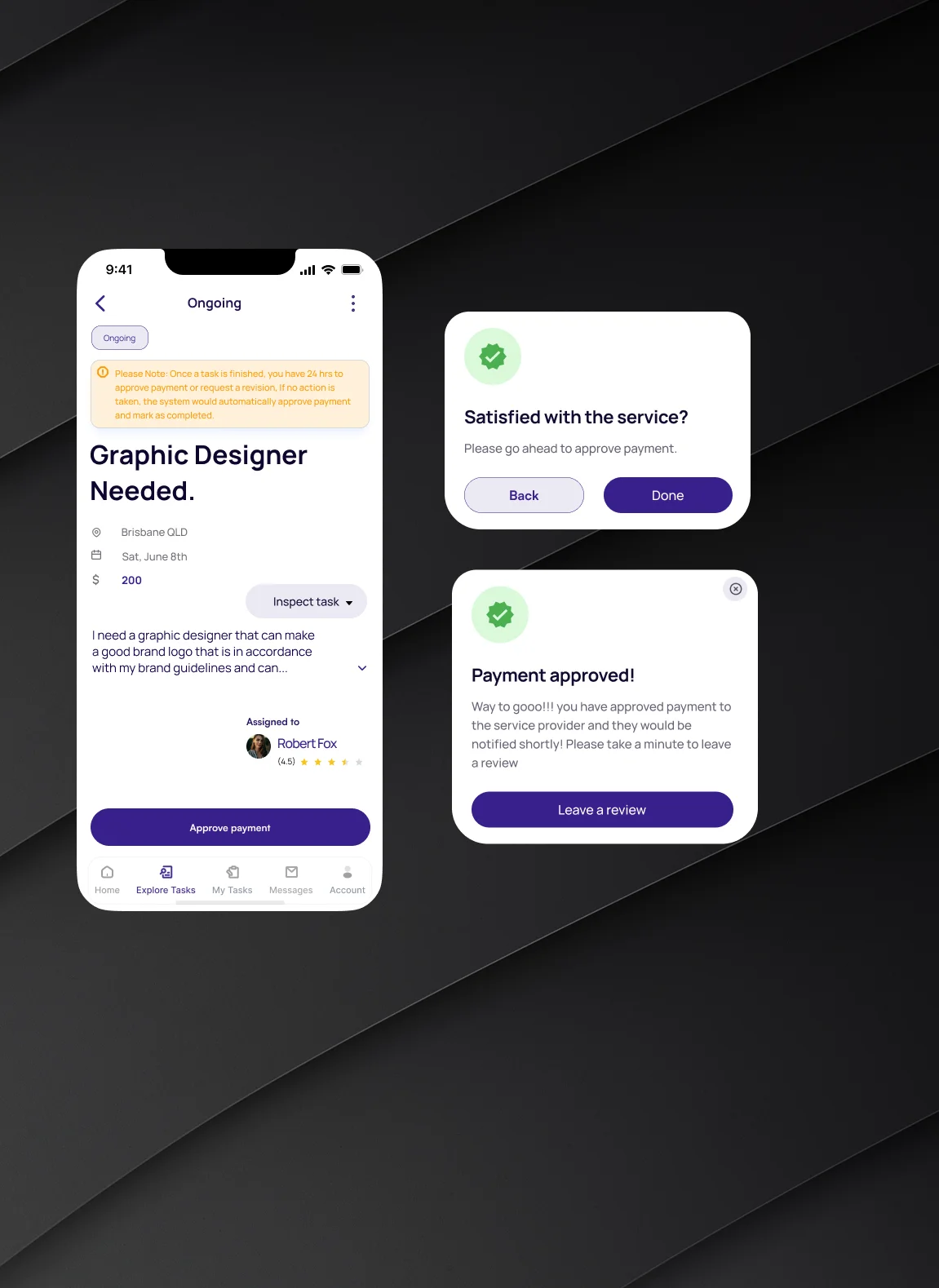
Customer confirms
→
Payment released
DESIGNING AROUND TRUST

Trust wasn't one feature.
It ran through the whole transaction.

Provider credibility

Ratings, reviews, work history

Price transparency

Public offers, comparable proposals

Transaction protection

Escrow, payment states

Completion

Customer confirmation

KEY DESIGN DECISIONS

Three decisions,
three deliberate trade-offs.

01

Make offers visible

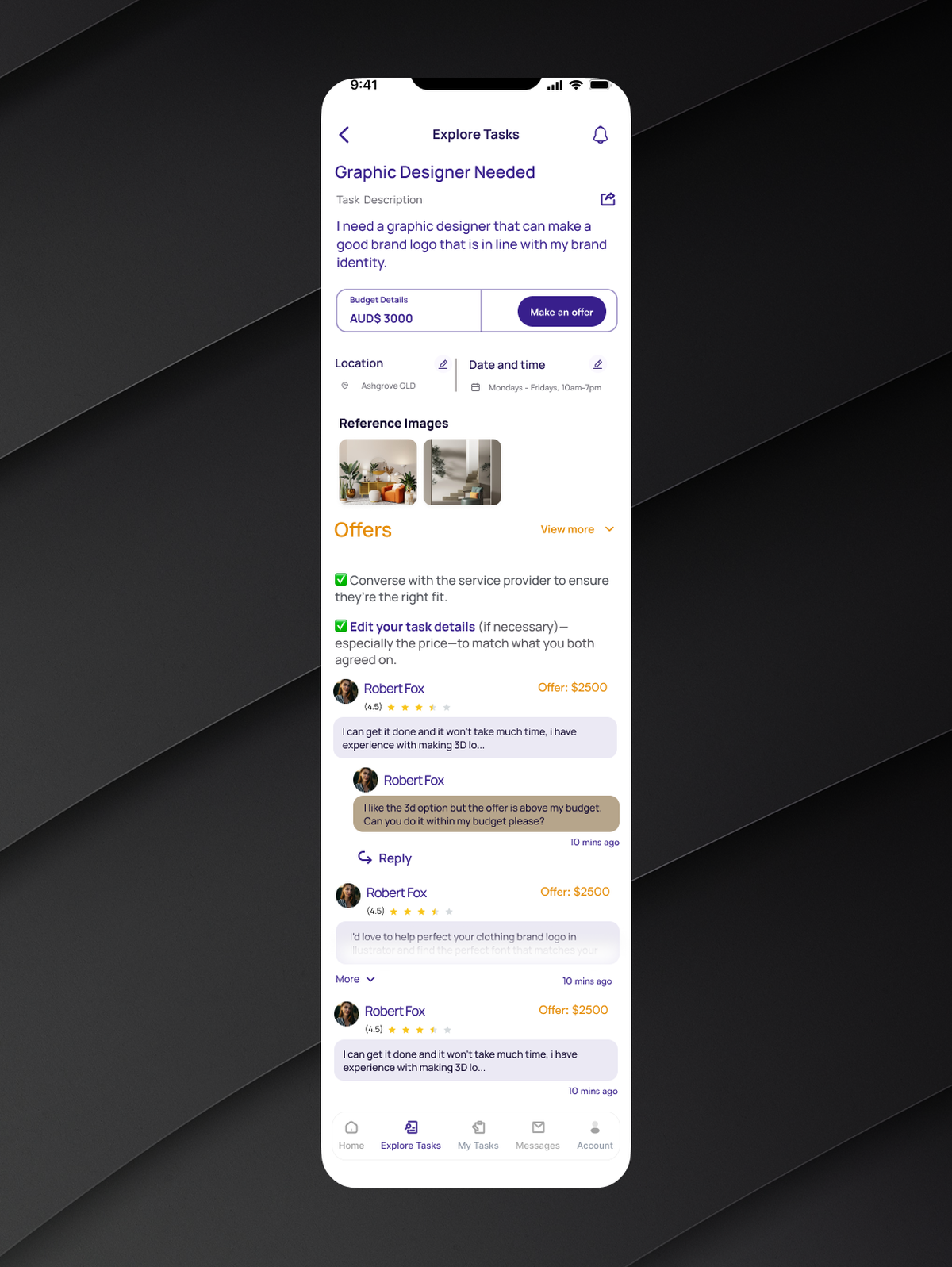
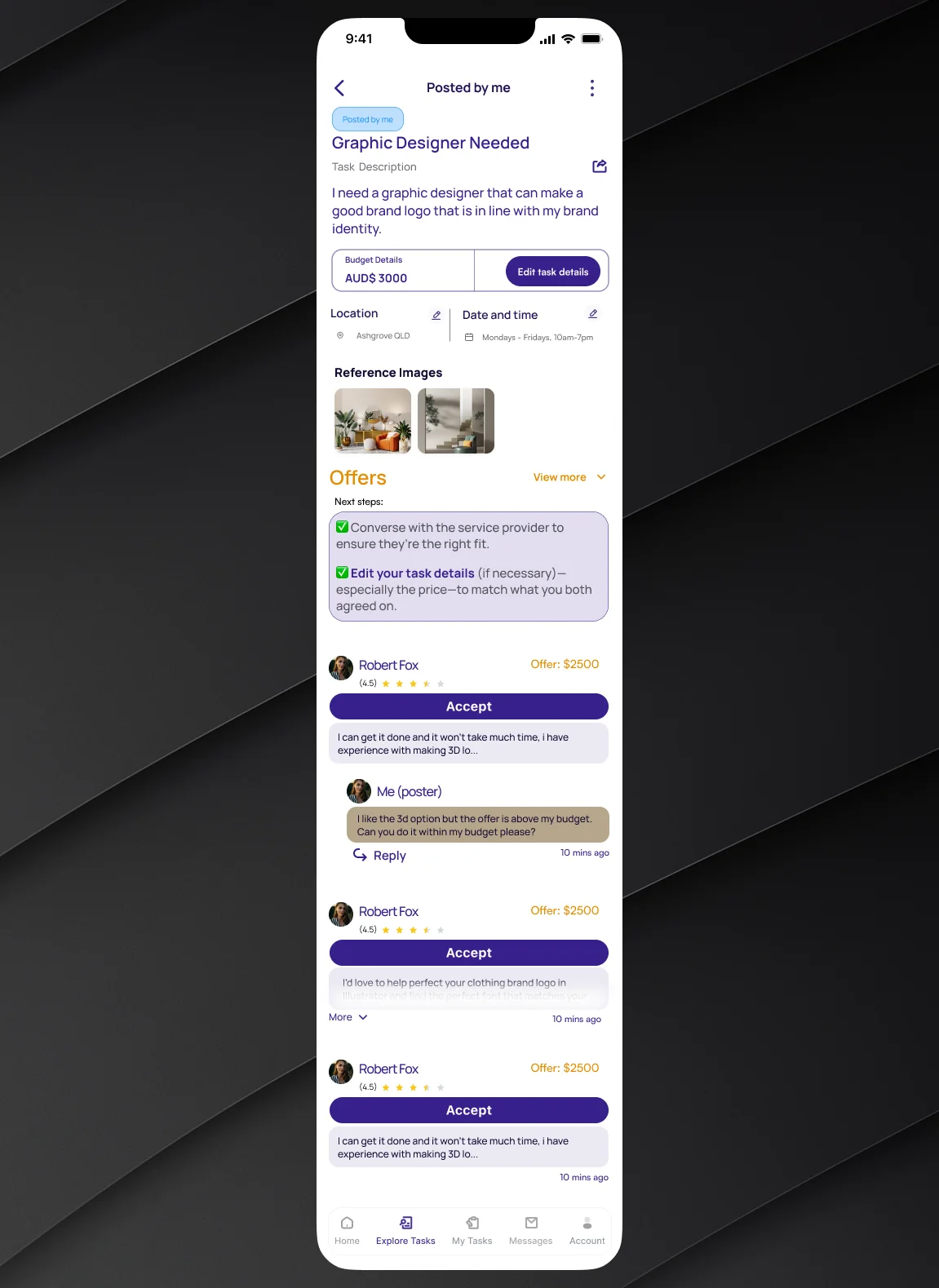
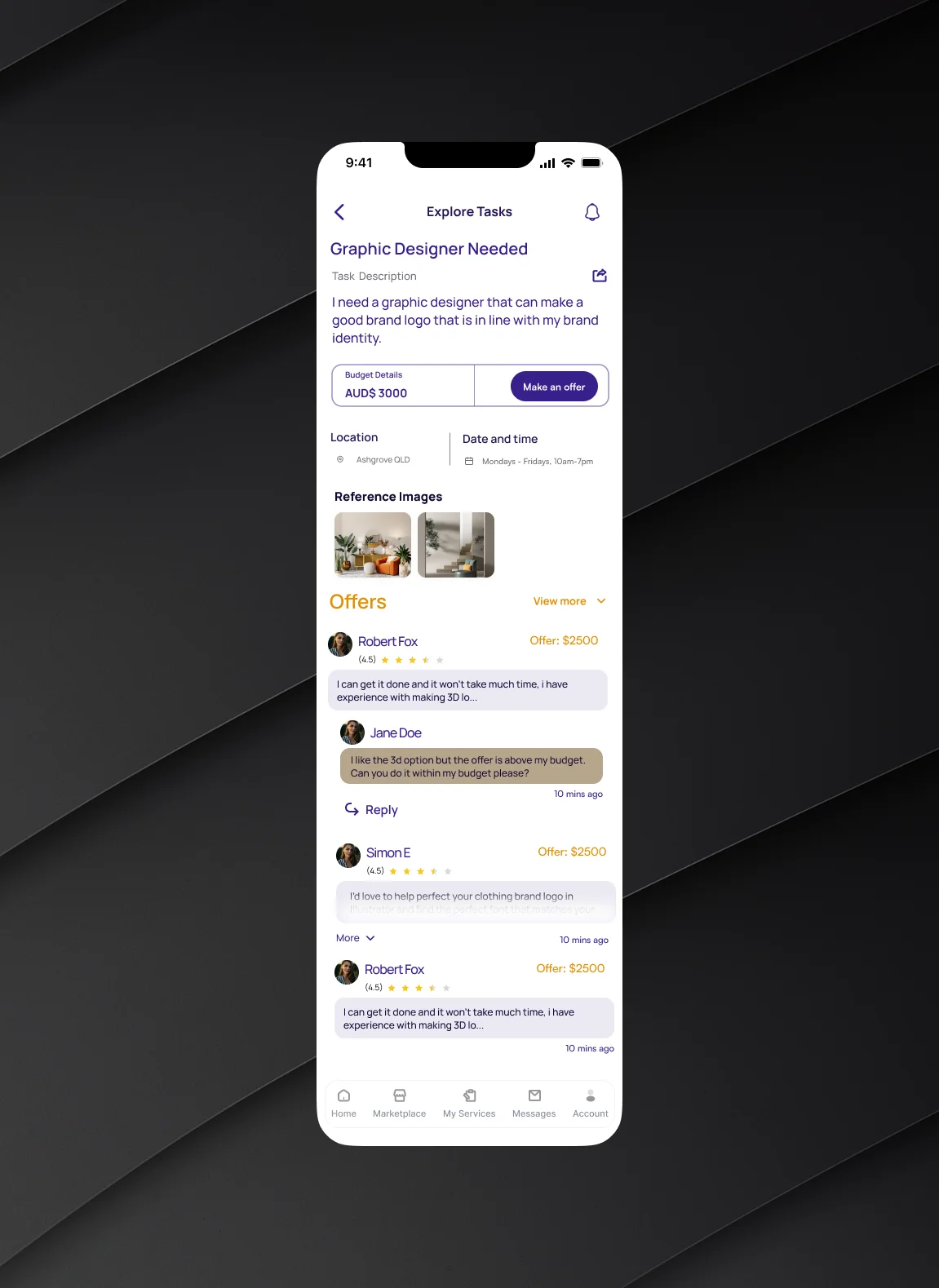
Instead of keeping provider proposals hidden inside private conversations, offers were designed to be visible within the marketplace.

Why

Customers could compare proposals before choosing. Providers could understand the competitive context.

The trade-off: providers had less control over keeping pricing private — in exchange for a marketplace with real pricing transparency.
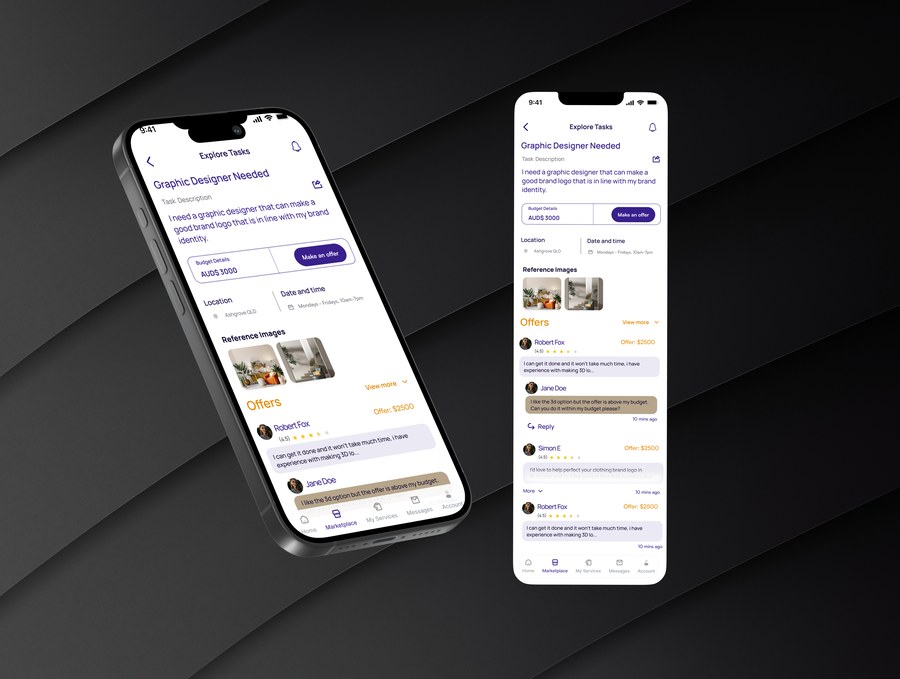
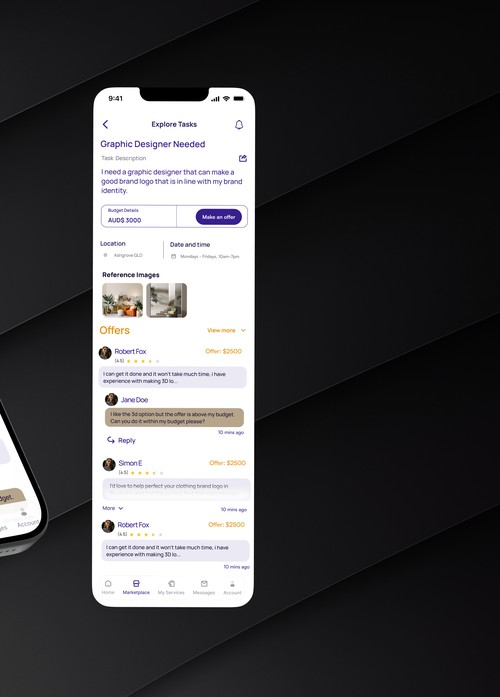
Oloja — public offers and negotiation screens
Oloja — offers section detail with multiple providers bidding
Provider offer
Customer negotiates
Competing offer
02

Protect provider time

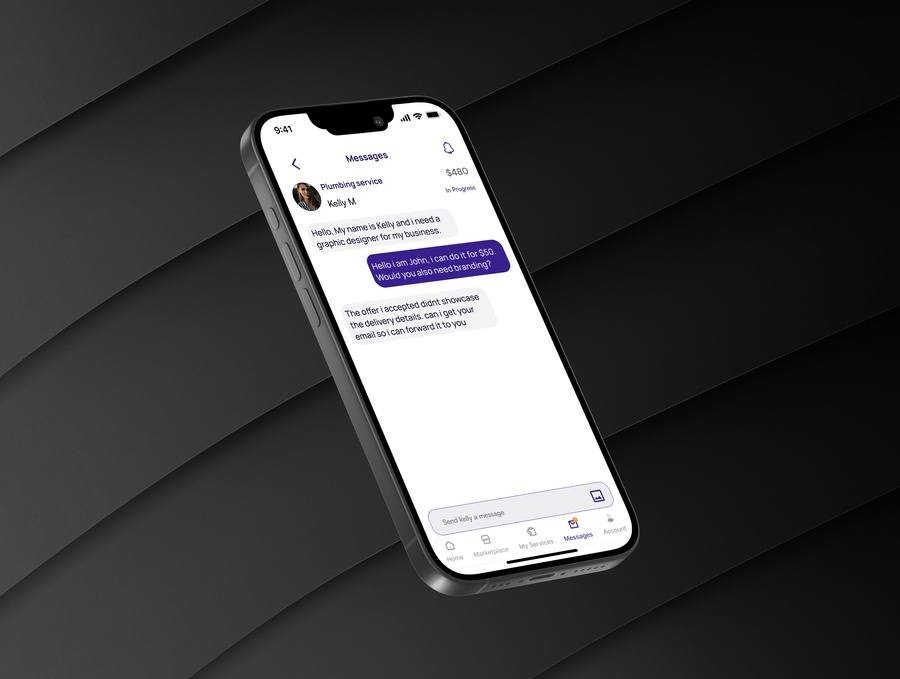
Unrestricted chat was limited until a transaction had actually progressed.

Why

Providers could otherwise lose significant time answering questions about projects that never became paid work.

The trade-off: customers had less free-form conversation before choosing a provider — prioritising a clearer transition from interest to commitment.

Oloja — messages screen showing chat unlocked after offer accepted
Chat unlocks only
after offer accepted
03

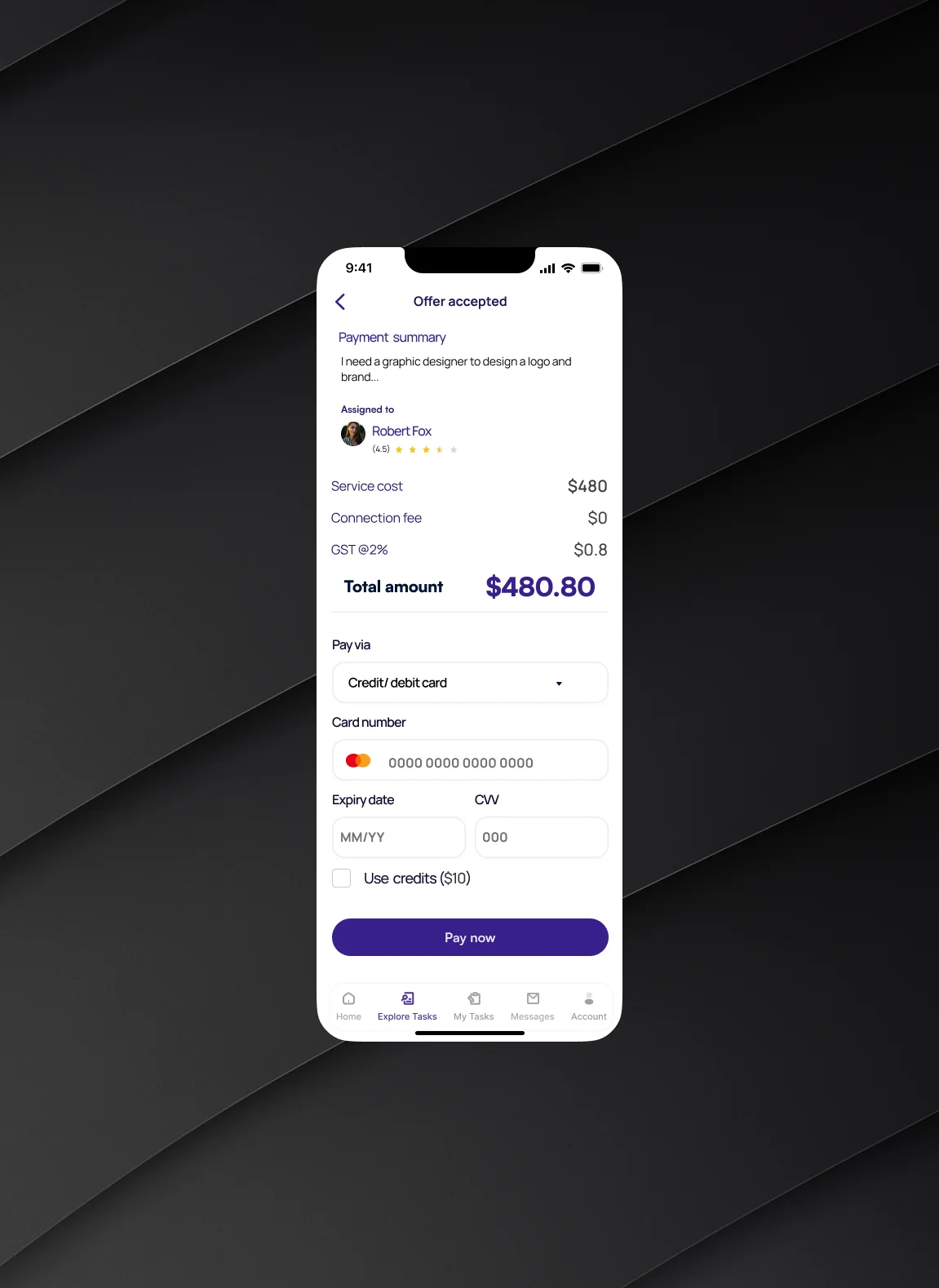
Make escrow part of the transaction

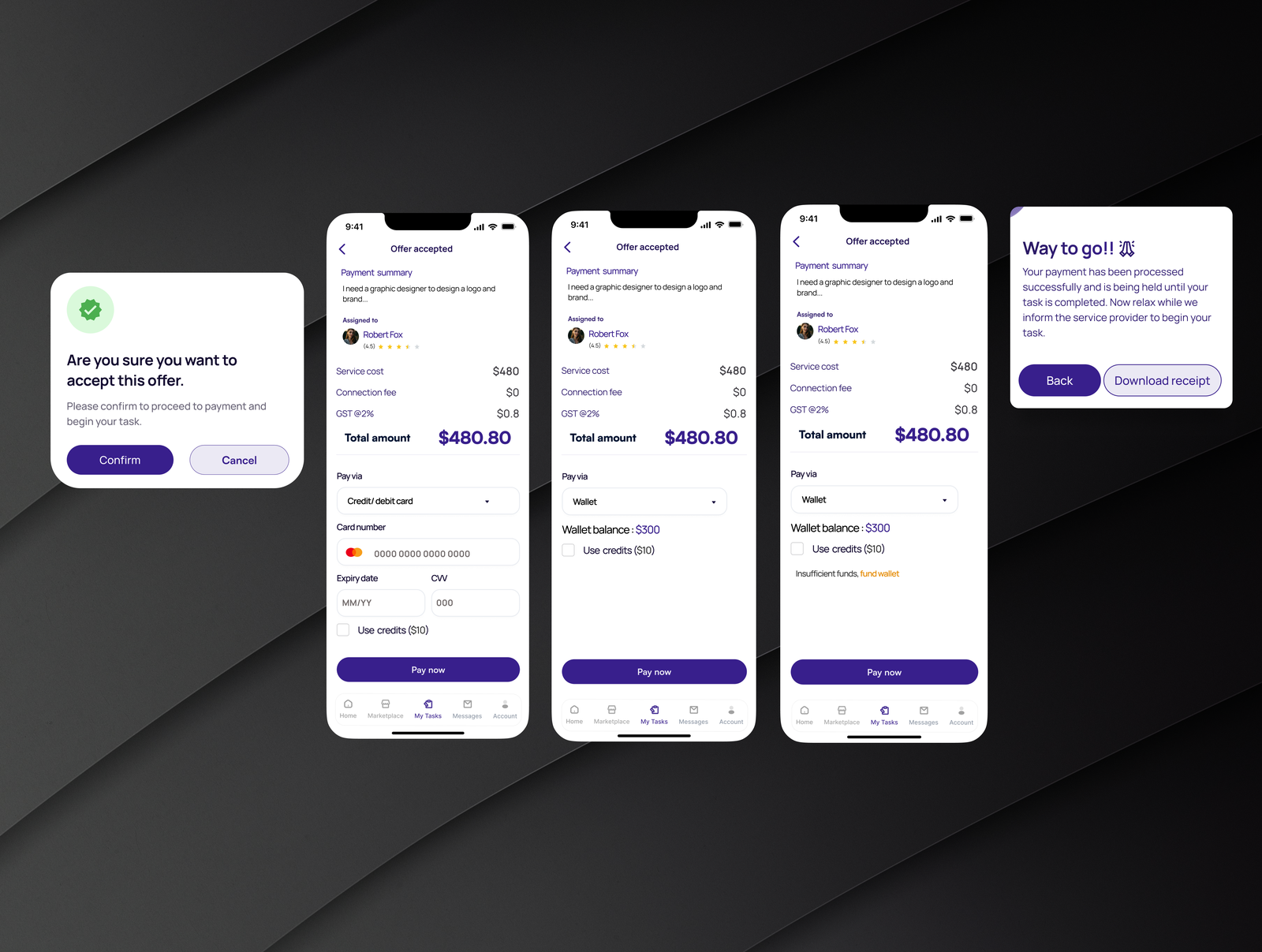
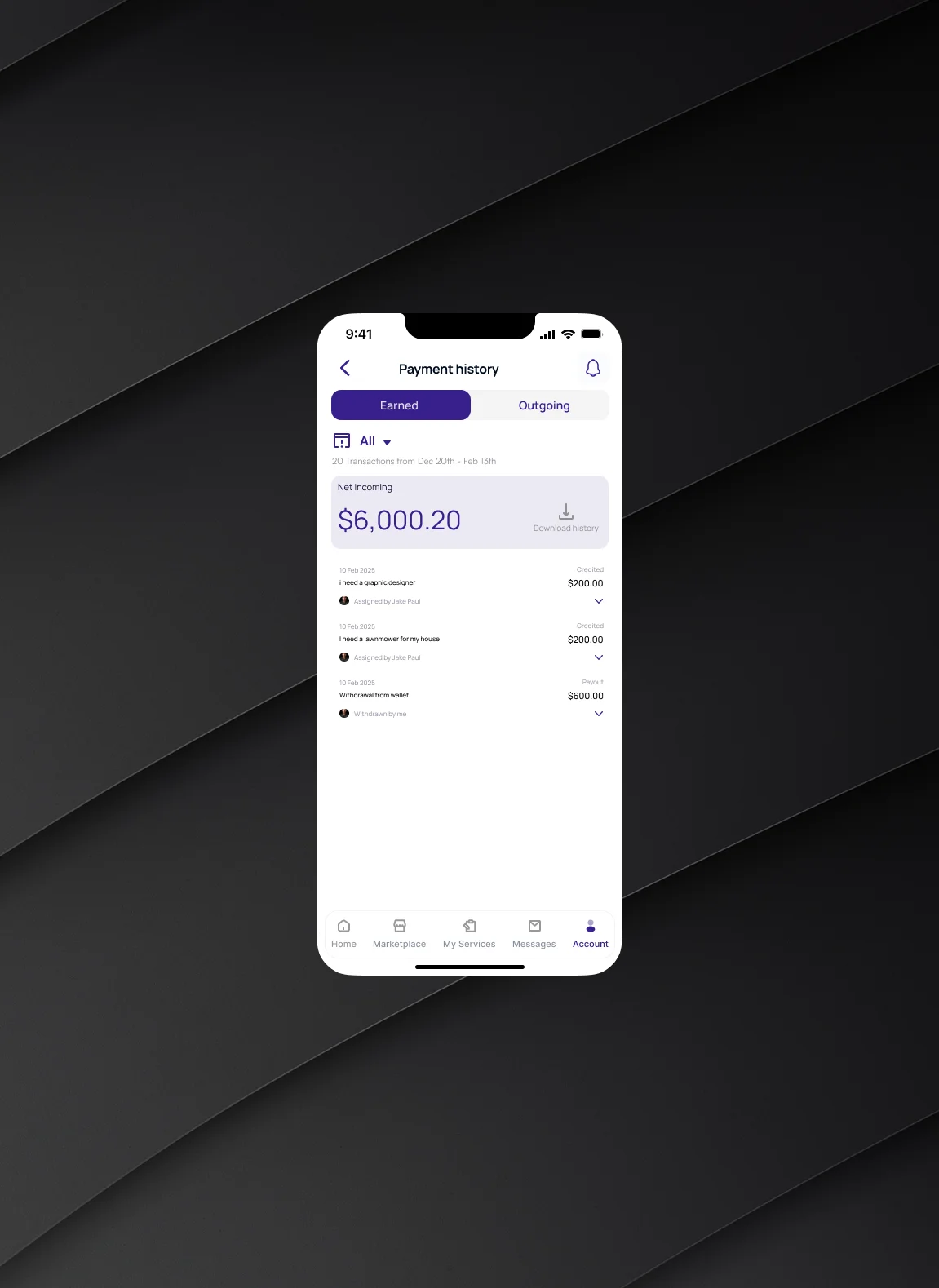
Payment was built around escrow rather than sending money directly to the provider on commitment. The customer pays, funds are held, the provider completes the work, the customer confirms, and only then is payment released.

Why

Protection for both sides — customers weren't handing money directly to a stranger, and providers had a defined payment mechanism once work was accepted and completed.

The trade-off: escrow adds transaction states and requires the customer to actively confirm completion — extra structure in service of the trust model.

Oloja — escrow payment flow: confirm, pay, success
Your money is held safely
until the job is done
DESIGNING FOR BOTH SIDES

Oloja wasn't a single-user product.

Every major decision had to account for customers and providers at the same time.

Customer
Post
Describe what you need.
Compare
Review offers and providers.
Choose
Select the best fit.
Pay
Secure the transaction.
Confirm
Approve completion.
Provider
Discover
Find relevant opportunities.
Respond
Submit an offer.
Win
Get selected by the customer.
Deliver
Complete the service.
Get paid
Receive the secured payment.
DESIGNING THE CUSTOMER EXPERIENCE

Need → provider → transaction

DESIGNING THE PROVIDER EXPERIENCE

A different set of questions

What opportunities are available to me?
Which ones are relevant?
How do I submit an offer?
What happens after I'm selected?
When will I get paid?
BUILDING THE SYSTEM

A reusable structure,
not just visual consistency.

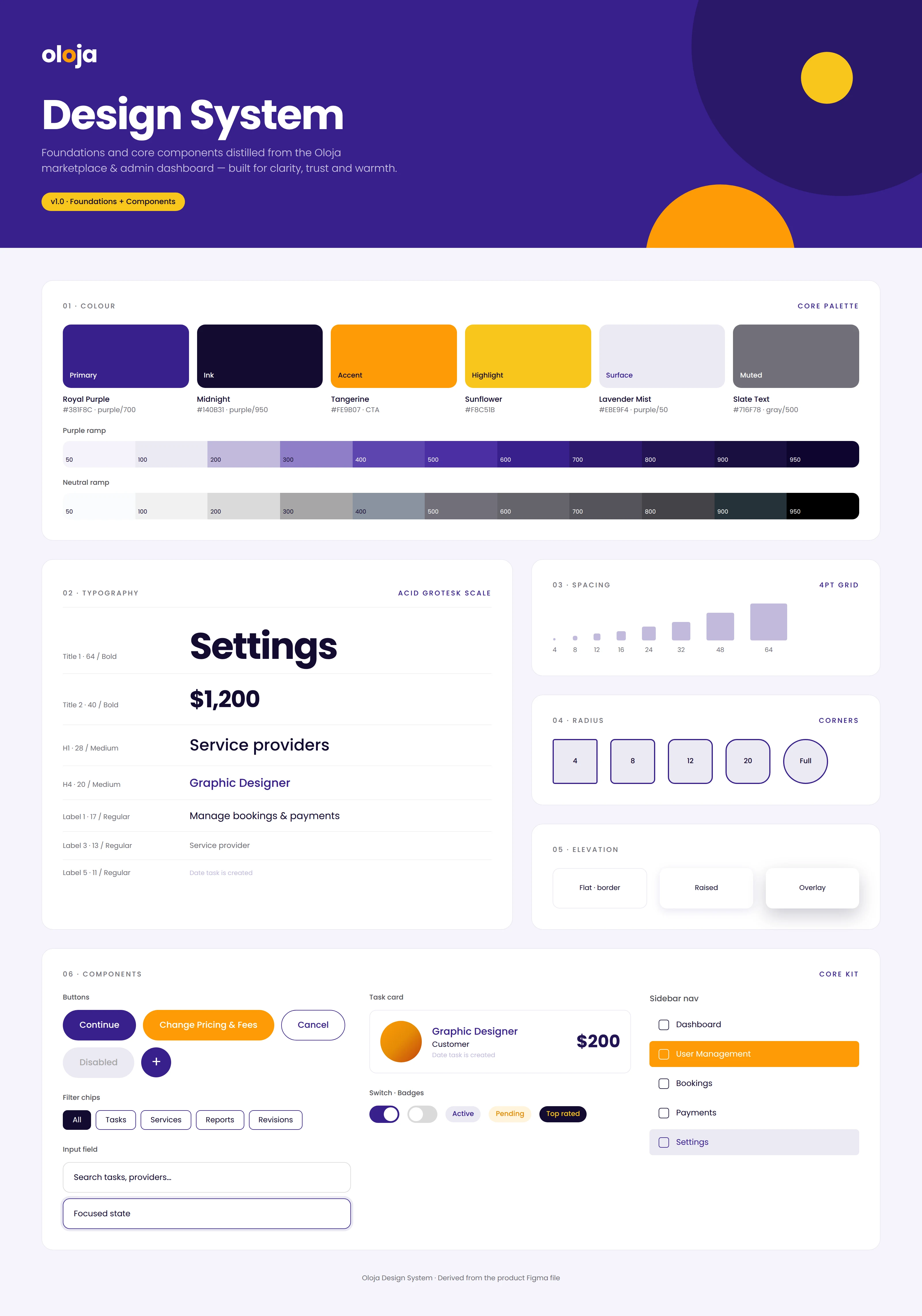
Because I owned the product design end-to-end, I also created the Oloja design system — foundations, components and patterns that could support multiple user types, transaction states and future iterations.

Foundations
  • Typography
  • Colour
  • Spacing
  • Grid
  • Icons
Components
  • Buttons
  • Inputs
  • Cards
  • Navigation
  • Modals
  • Status indicators
Patterns
  • Offers
  • Profiles
  • Payments
  • Forms
  • Transaction states
  • Empty states
Oloja design system — colour, typography, spacing, radius, elevation and core components
THE FINAL PRODUCT

A complete product experience

Customer

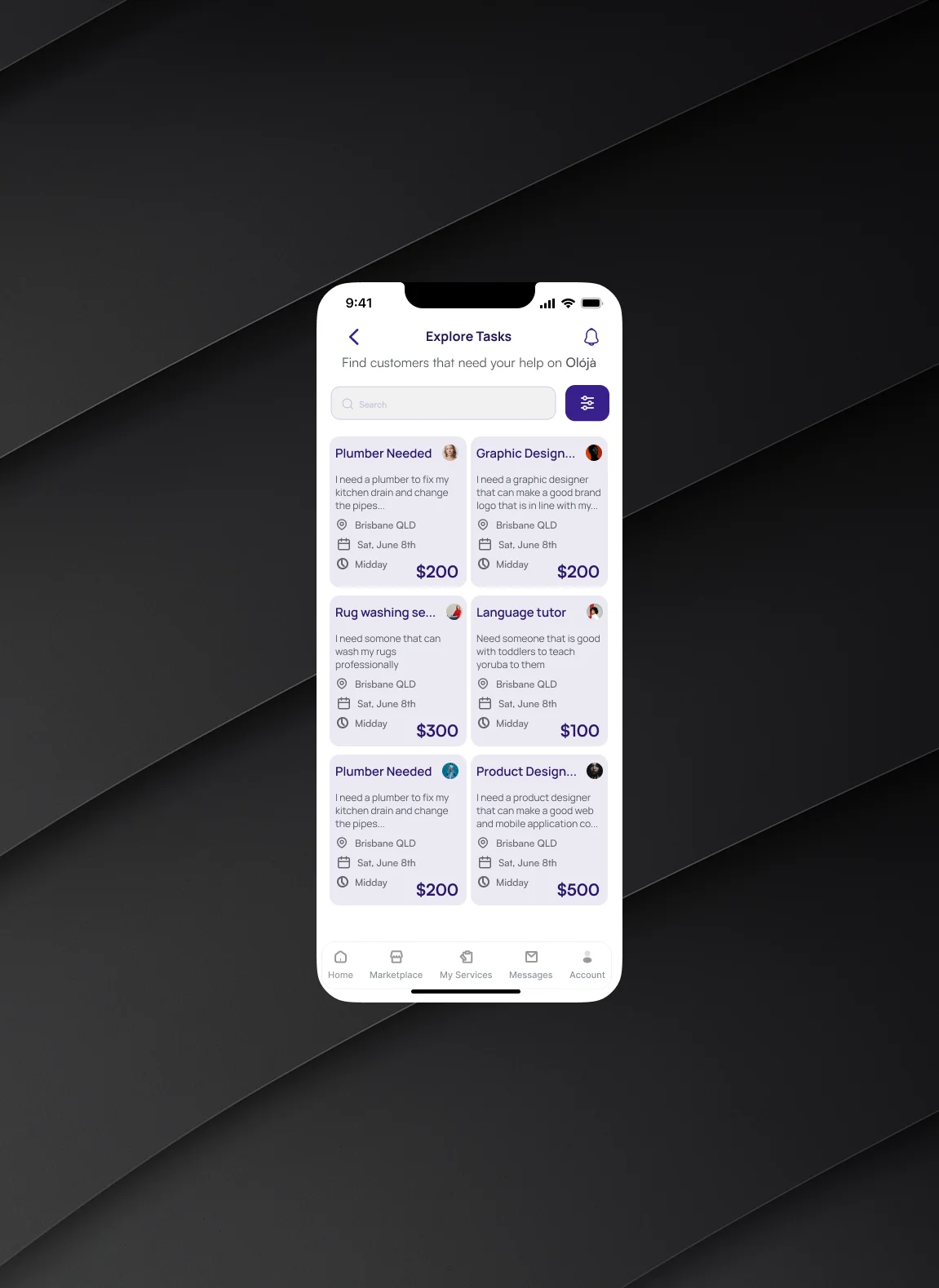
Discovery, task creation, offers, provider profiles

Provider

Opportunities, offers, work management, earnings

Transactions

Payment, escrow, confirmation, completion states

Product system

Navigation, components, states, design system

SELECTED PRODUCT GALLERY
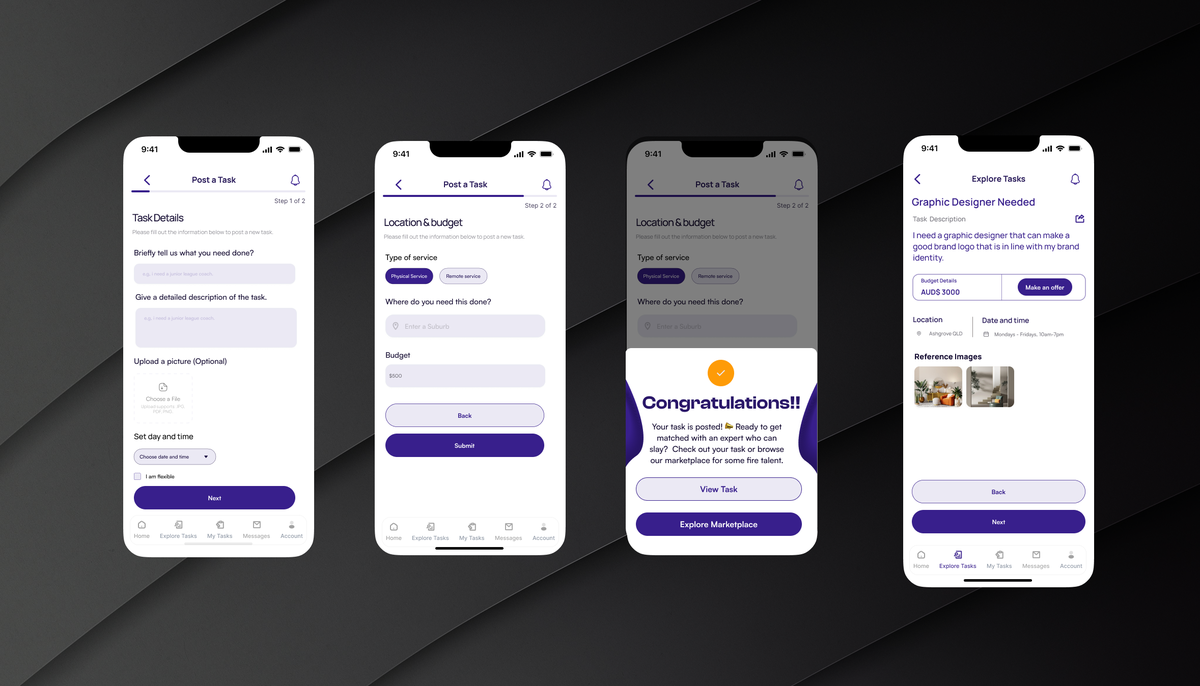
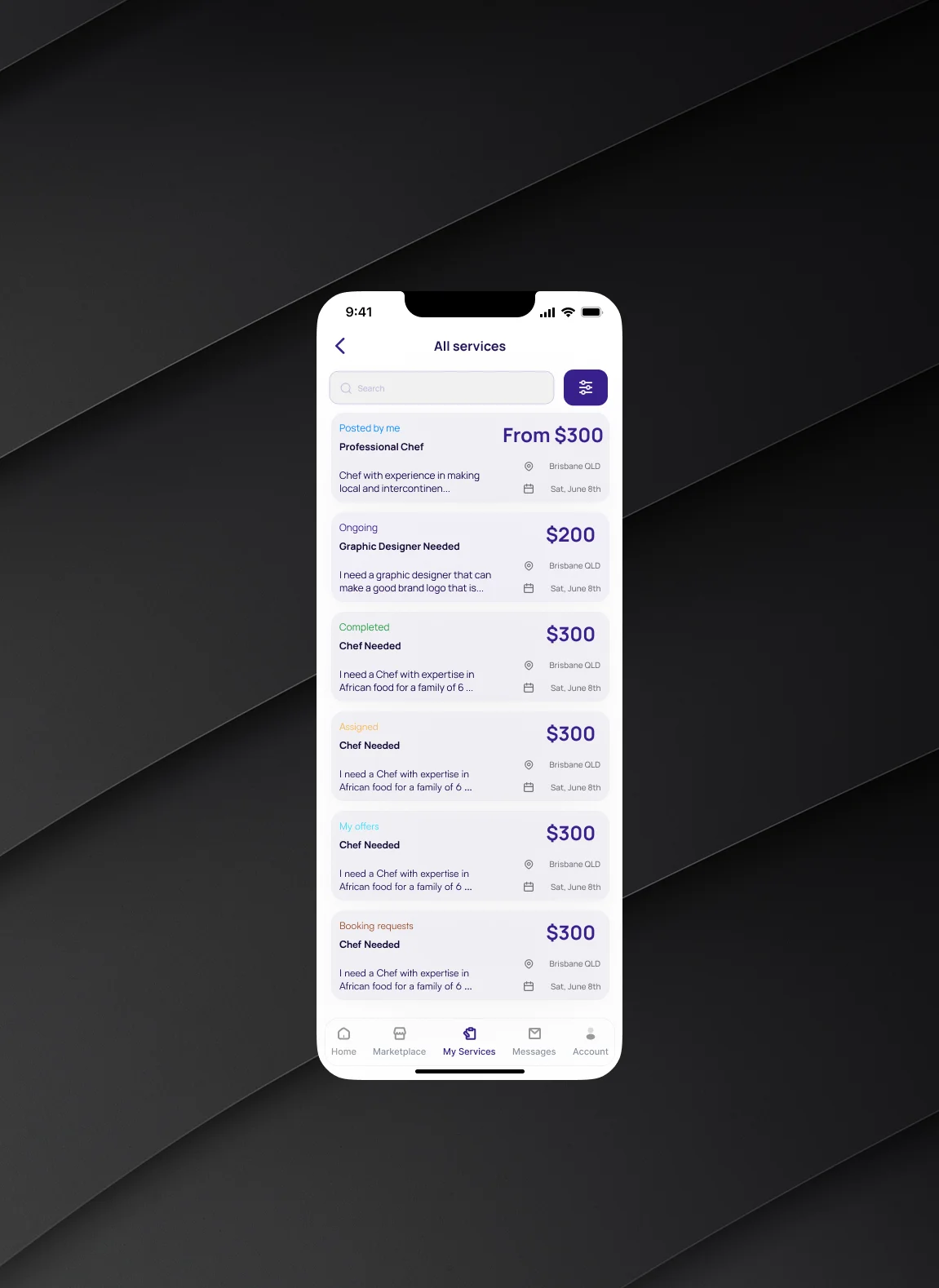
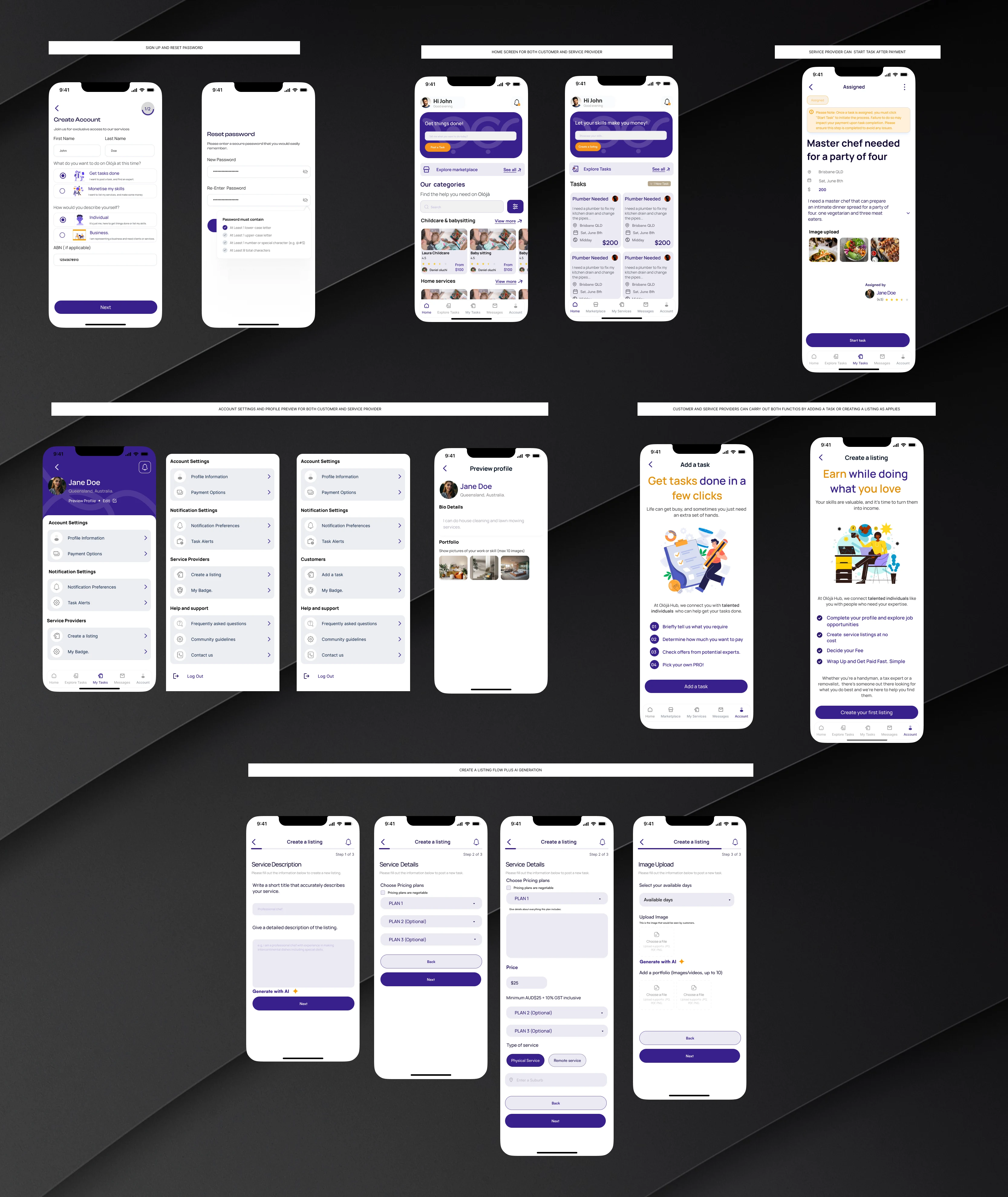
Oloja selected product gallery — sign up, home screens, task assignment, account settings, add a task, create a listing flow with AI generation
MAKING IT REAL

Handoff & launch

I completed the UX/UI design and design system, and handed the work over for development.

The product did not ultimately launch, due to technical and company-level constraints outside the design work itself.

WHAT THIS MEANS FOR THE CASE STUDY

There's no production data to claim here.

Research
Complete
UX & UI design
Complete
Design system
Complete
Product
Not launched

Instead, this case study demonstrates the work I was responsible for: research → product exploration → UX architecture → UI design → design system → development handoff. The designs were prepared as a complete product experience, not isolated screens.

WHAT I'D MEASURE AFTER LAUNCH

Offer-to-hire conversion

How often does a customer choose a provider after receiving offers?

Provider activation

Do providers who sign up actually submit offers?

Task completion

How many accepted jobs successfully reach completion?

Transaction abandonment

Where do customers drop out of the payment or escrow flow?

Disputes & cancellations

Where does trust break down between customers and providers?

Repeat usage

Do customers return, and do providers keep participating?

LOOKING BACK

Marketplace design isn't simply about connecting two people. You're designing the rules that govern what happens between them.

Who sees the offer?
When can they communicate?
When does money move?
Who is protected?
What happens when the work is complete?
What happens when something goes wrong?

Those decisions became as important to the product as the screens themselves.

WHAT I BROUGHT TO THIS PROJECT
Product definition

Translated an initial brief into a structured product experience.

User research

Spoke directly with the target audience on trust, pricing, provider needs.

0→1 product design

Designed customer and provider experiences from the ground up.

Marketplace UX

Designed the mechanics behind offers, negotiation, payment, completion.

Design system

Created the reusable system supporting the entire product.

End-to-end ownership

Brief and research through design and development handoff.

MORE CASE STUDIES